


THE BIG RESET: WILL NIGERIANS FEEL IT?
Something important happened in Abuja last week.
It did not involve a defection, a campaign rally or another declaration about 2027. It happened at the Central Bank.
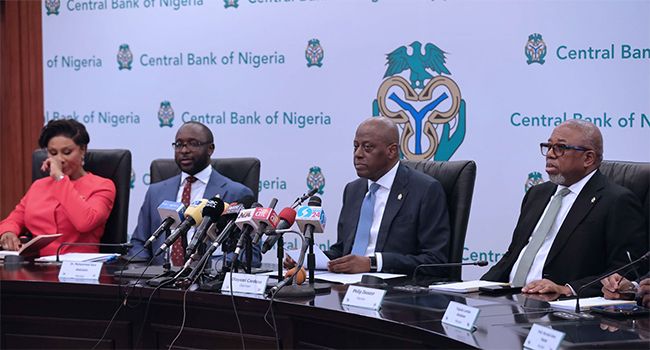
The Monetary Policy Committee reset Nigeria’s benchmark interest rate from 26.5 per cent to 23 per cent; a dramatic 350-basis-point adjustment, while recalibrating the corridor around the Monetary Policy Rate. The CBN insists that this is not simply a return to easy money. It describes it as an operational reset intended to reconnect the official policy rate with the rates actually operating in the financial system.
Technically, that distinction matters. Politically, something else matters even more: Will Nigerians feel it? That may be one of the defining economic questions on the road to 2027.
For much of the Tinubu presidency, the political argument over the economy has been relatively straightforward. Government asked Nigerians to endure difficult reforms today for a more stable economy tomorrow. The opposition pointed to food prices, fuel costs, the naira and falling purchasing power and asked how long “tomorrow” was supposed to take.
Now the argument is becoming more complicated.
The CBN says inflation has moderated to 15.39 per cent. It cited real GDP growth of 4.43 per cent in the second quarter and strengthening economic activity as part of the evidence that the macroeconomic adjustment is becoming more balanced. Those are significant indicators. They provide the government with something it badly needs as the election approaches: evidence with which to argue that the pain of its reforms is beginning to produce macroeconomic stability. But elections are not conducted inside spreadsheets. They are conducted in homes, markets, farms, factories and polling units. And that is where the next economic battle will be fought.
Consider what has happened since the CBN announcement. Commercial-bank lending rates have not immediately fallen substantially. Manufacturers say that if businesses continue borrowing at rates approaching 30 per cent, the benefits of the CBN reset will be limited.
That is hardly surprising. Monetary-policy transmission takes time. But politically, time is precisely the problem.
Nigeria’s presidential election is scheduled for January 16, 2027. The economic argument therefore has a deadline. Between now and then, Nigerians will be asking questions considerably simpler than the language of monetary policy: Are prices becoming more manageable? Can businesses borrow more cheaply?
Is the naira becoming more predictable? Are jobs becoming easier to find? Does my income buy more than it did a year ago? That is the distance between macroeconomic stabilisation and political benefit. And it is a distance the government will want to close quickly.
THEN CAME THE DEBT NUMBERS
There is another economic number competing for attention. On Friday, the Debt Management Office published Nigeria’s public-debt position as of June 30. Total public debt stood at about ₦166.79 trillion, up from roughly ₦159 trillion at the end of March.
The opposition quickly seized on it. Atiku Abubakar has demanded a fuller accounting of the borrowing and is attempting to connect rising debt with the hardship Nigerians have experienced during the administration’s reform programme. That criticism is part of the emerging campaign argument; it does not by itself establish whether the borrowing is sustainable or how effectively it has been deployed. But politically, place the two developments side by side.
Inflation: 15.39 per cent.
MPR: down to 23 per cent.
GDP: growing at 4.43 per cent in Q2.
And yet:
Public debt: ₦166.79 trillion.
There, in four numbers, is much of the economic argument that may accompany Nigerians into the polling booth. The government can point to stabilisation. The opposition can ask about debt and living standards. The voter will ultimately decide which argument corresponds more closely with lived experience.