

When I heard that a harvest of death had occurred in Ondo after people consumed herbal drinks, my mind did not first go to the statistics.
It went to Innocent Odey. Innocent was my bosom friend, my course mate and my roommate during our undergraduate years. He was brilliant and full of promise, the sort of young man whose future seemed already written in invisible ink.
He died after attempting to treat himself with local herbs.
They were believed to be potent. They were believed to be natural. They were believed to be safe. We lost him anyway.
Perhaps that is why the latest tragedy in Ondo feels less like news to me than an old wound being reopened.
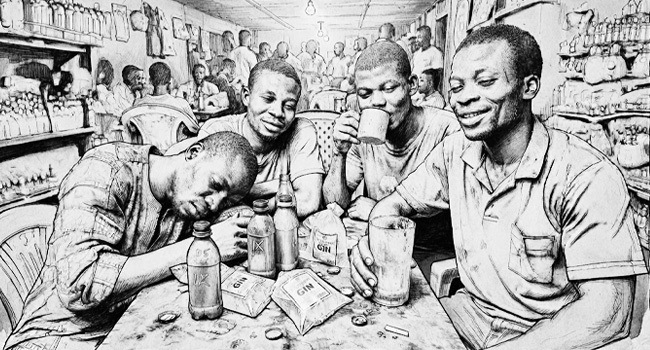
On September 5, 2026, Shola drank two shots of a locally produced herbal alcoholic drink known as Monkey Tail. By the following morning, he had lost his sight.
At least 32 others who consumed the same batch were not as fortunate. They lost their lives. About 60 more people are reportedly in hospital. Among the dead were three siblings. Three people from the same family.
One evening. One substance. Three graves.
There are tragedies that happen because nobody could have known. And there are tragedies that happen because somebody should have known, but nobody did enough.
This one belongs dangerously close to the second category.
We have been here before.
In 2015, methanol-contaminated alcoholic drinks killed scores of Nigerians in Rivers and Ondo states. In 2023, another adulterated alcoholic drink outbreak in Lagos killed eight people and left 11 others seriously ill.
The geography changes. The victims change. The batch changes. The chemistry does not. There is an almost cruel simplicity to the science.
Methanol and ethanol share some physical characteristics. But resemblance is not safety.
Ethanol is the alcohol ordinarily found in legitimate alcoholic beverages. Methanol is highly toxic. Exposure can cause visual impairment, neurological injury, and death.
The frightening part is that methanol does not necessarily announce itself. It can look and smell like ethanol. Its early effects can resemble ordinary intoxication. The person taking the shot may therefore have no reason to suspect that the liquid is poisonous.
The geography changes. The victims change. The batch changes. The chemistry does not. There is an almost cruel simplicity to the science.
Methanol and ethanol share some physical characteristics. But resemblance is not safety.
Ethanol is the alcohol ordinarily found in legitimate alcoholic beverages. Methanol is highly toxic. Exposure can cause visual impairment, neurological injury, and death.
The frightening part is that methanol does not necessarily announce itself. It can look and smell like ethanol. Its early effects can resemble ordinary intoxication. The person taking the shot may therefore have no reason to suspect that the liquid is poisonous.